
Vagus Nerve Stimulation for Perimenopause Calming
Discover how vagus nerve stimulation for perimenopause anxiety relief can calm heart palpitations, improve HRV, and balance your nervous system during midlife.
Published:
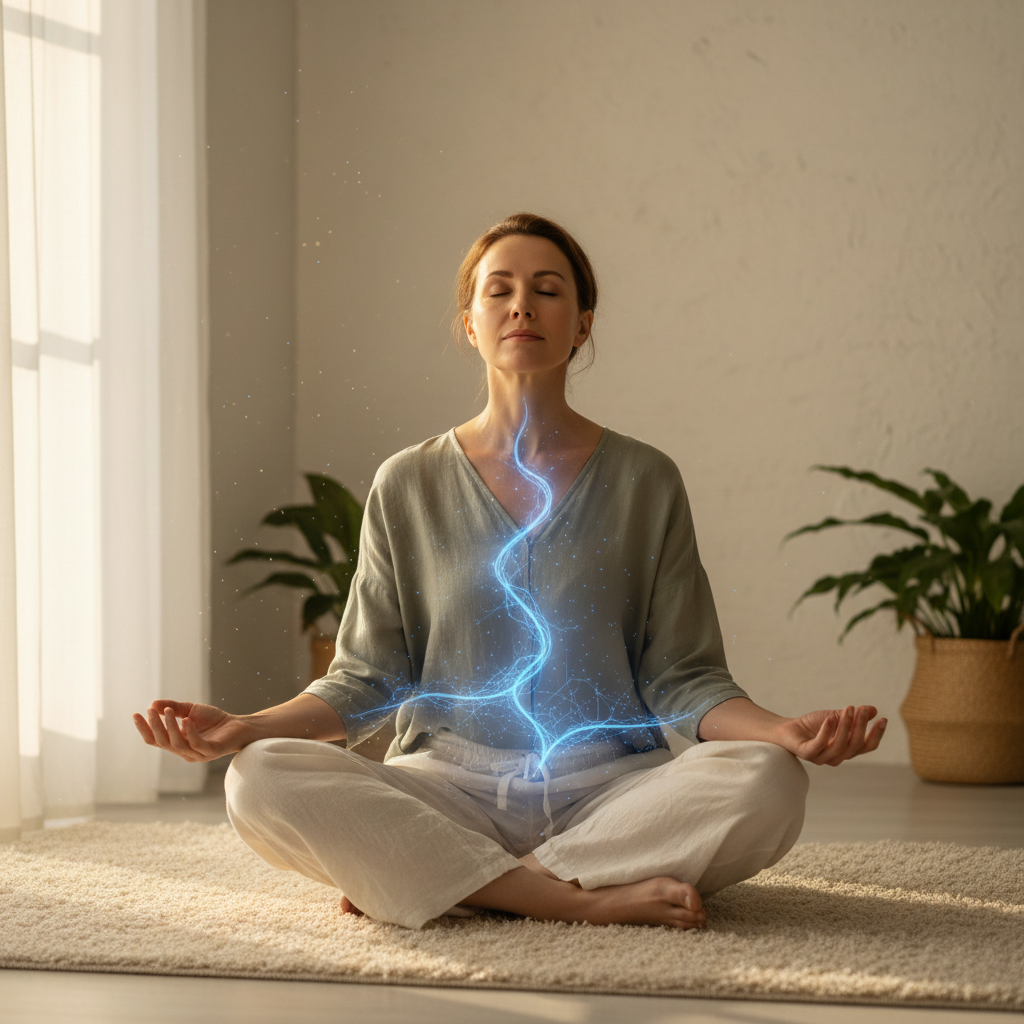
If you have ever felt a sudden wave of heat, followed immediately by a racing heart and a sense of impending doom, you aren't "crazy." You are likely experiencing the profound neurological crossroads where your hormones meet your nervous system. For many women in their 40s, the physical experience of anxiety feels less like a mental worry and more like a systemic electrical glitch. This is why vagus nerve stimulation for perimenopause anxiety relief is becoming one of the most researched frontiers in midlife wellness.
The vagus nerve is the longest cranial nerve in your body, acting as a bidirectional superhighway between your brain and your vital organs. During the transition into menopause, the decline of estrogen disrupts this communication, leaving you in a state of constant "high alert." By learning how to tone your vagus nerve, you can manually flip the switch from "fight or flight" back to "rest and digest."
How does the vagus nerve relate to your shifting hormones?
To understand why your nervous system feels so fragile right now, we have to look at the relationship between estradiol and your autonomic nervous system (ANS). The vagus nerve is the primary component of the parasympathetic nervous system (PNS). Its job is to lower your heart rate, facilitate digestion, and promote a sense of calm.
Estrogen acts as a modulator for the vagus nerve. Research suggests that estrogen enhances vagal activity, meaning that when your estrogen levels are high and stable, your body is naturally better at "calming down" after a stressful event. As you enter perimenopause, your estrogen levels begin to fluctuate wildly before eventually dropping. This withdrawal of estrogen can lead to "vagal withdrawal," where the parasympathetic nervous system loses its grip, allowing the sympathetic (stress) nervous system to run unchecked.
This hormonal shift is often the root cause behind many items on the perimenopause symptoms checklist, particularly heart palpitations and sleep disturbances. When the vagus nerve isn't firing correctly, your body stays in a state of hyper-vigilance, making you more susceptible to the brain fog and metabolic changes seen in perimenopause insulin resistance signs.
Can vagus nerve exercises stop a perimenopausal panic attack?
The beauty of the vagus nerve is that it is a physical structure you can influence through specific mechanical actions. While a panic attack feels like a psychological event, it is a physiological cascade of adrenaline and cortisol. You can use "bottom-up" signaling—using the body to calm the brain—to interrupt this cycle.
When you are in the middle of an anxiety spike, your breathing usually becomes shallow and rapid. This sends a signal to the brain that you are in danger. By performing specific vagus nerve exercises, you send a physical signal of safety to the brainstem.
- The Valsalva Maneuver: Close your mouth and pinch your nose, then try to exhale forcibly for about 10-15 seconds. This increases pressure in the chest and stimulates the vagus nerve to slow the heart rate.
- The "Voo" Chant: Sound is one of the most effective ways to reach the vagus nerve because it passes right by the vocal cords. Taking a deep breath and making a low-frequency "Voo" sound on the exhale creates vibrations in the chest and throat that stimulate the nerve.
- Lateral Eye Movements: Without moving your head, look as far to the right as you can until you feel a localized release (often a yawn or a swallow). Repeat on the left. This targets the polyvagal system to transition you out of a "freeze" state.
Many women find that even if these exercises don't stop the panic attack instantly, they significantly shorten its duration and reduce the "hangover" effect of the adrenaline dump.
How does low estrogen affect your body's 'rest and digest' state?
The "rest and digest" state is the hallmark of a healthy vagal tone. When estrogen is low, your body's threshold for stress decreases. This is why you might find that foods you used to tolerate now cause bloating, or why you have trouble falling asleep even when you are exhausted.
According to the North American Menopause Society, the decline in estrogen affects the way the brain processes signals from the body. Without enough estrogen to support vagal tone, the digestive system slows down (leading to constipation or bloating) and the heart becomes more reactive to caffeine, sugar, and emotional stress.
Furthermore, if you are also dealing with other inflammatory conditions, the lack of vagal support can worsen your experience. For example, the fibromyalgia perimenopause symptoms and the Hashimotos perimenopause overlap are both characterized by systemic inflammation. A strong vagus nerve is the body's primary anti-inflammatory pathway; when it weakens due to low estrogen, inflammation can spiral out of control.
What are the best at-home tools for vagus nerve stimulation?
While manual exercises are free and effective, several technological advancements have made vagus nerve stimulation for perimenopause anxiety relief more accessible. These tools work by using low-level electrical impulses or vibrations to "massage" the nerve.
| Tool Type | Method | Why it works for Perimenopause |
|---|---|---|
| tVNS Devices | Transcutaneous Electrical Nerve Stimulation (Ear) | Targets the auricular branch of the vagus nerve to reduce anxiety and improve sleep. |
| Vibrational Devices | Placed on the sternum (chest) | Uses low-frequency resonance to mimic the effects of humming/chanting. |
| HRV Monitors | Wearable straps or rings | Tracks Heart Rate Variability to tell you when your nervous system is overtaxed. |
| Weighted Blankets | Deep Pressure Stimulation | Provides proprioceptive input that signals the brain to lower cortisol. |
If you are just starting your journey, you might consider HRT for perimenopause beginners guide as a first-line approach to stabilize the hormones that support the vagus nerve, and then use these tools to "fine-tune" your nervous system's resilience.
Does cold plunging or humming actually help the vagus nerve?
You may have seen "biohackers" jumping into ice baths or humming loudly in their cars. While it might look like a fad, there is significant science behind these practices.
Cold Exposure: When your body is suddenly exposed to cold water (especially your face and neck), it triggers the "diving reflex." This is an ancient physiological response that forces the heart rate to slow down and shifts blood flow to the brain and heart. For a perimenopausal woman dealing with a hot flash, a cold splash on the face does double duty: it cools the skin and forces the vagus nerve to engage, which can stop the palpitating heart that often accompanies the heat. The Mayo Clinic notes that cold stimulation can help reset the autonomic nervous system.
Humming and Chanting: As mentioned earlier, the vagus nerve is connected to the vocal cords and the muscles at the back of the throat. Singing, humming, or even gargling water activates these muscles. This "massages" the nerve from the inside out. For women over 40 who feel "tightness" in their throat or chest during periods of anxiety, these activities provide immediate mechanical relief.
How can I improve my heart rate variability (HRV) after 40?
Heart Rate Variability (HRV) is the Gold Standard metric for measuring vagal tone. Contrary to what many think, you don't want your heart to beat like a metronome. You want a high degree of variability between heartbeats, which indicates that your nervous system is flexible and can pivot between stress and relaxation easily.
In perimenopause, HRV typically drops. This is a sign that your "stress bucket" is full. Improving your HRV is a long-term game of "toning" the nerve.
- Paced Breathing: Aim for 5.5 to 6 breaths per minute. This rhythm, often called "Coherent Breathing," has been shown to maximize HRV and put the heart and brain into a state of resonance. The NIH reports that slow, regulated breathing can significantly decrease sympathetic activity.
- Magnesium Supplementation: Magnesium is crucial for the electrical signaling of the heart and nervous system. Since many women are deficient in magnesium during perimenopause, supplementing can provide the raw materials needed for the vagus nerve to function.
- Sleep Hygiene: The vagus nerve does its best "repair work" during deep sleep. If perimenopause is causing insomnia, your HRV will plummet. Prioritizing a cool, dark room and avoiding alcohol (which is a potent vagal suppressor) is essential.
Summary of Vagus Nerve Benefits
Managing your nervous system is not a luxury; during the hormonal transition of your 40s and 50s, it is a metabolic necessity. When the vagus nerve is functioning well, you have a higher "stress ceiling," meaning the daily irritations of life—or the physical symptoms of perimenopause—don't send you into a spiral of anxiety.
By combining hormonal support with physical vagal exercises, you can regain a sense of mastery over your body. You aren't just at the mercy of your ovaries; you have a direct "override" switch in the form of your vagus nerve.
According to the Cleveland Clinic, the vagus nerve is responsible for so many different body functions that keeping it healthy can improve everything from your mood to your immune response. As you navigate this transition, remember that cooling your system, breathing deeply, and even humming your favorite song are medical interventions in their own right. They are the tools that allow you to move through perimenopause with radiance rather than just "getting through it."
Whether you choose to use an high-tech ear stimulator or simply practice 10 minutes of deep belly breathing every morning, the goal is the same: to remind your body that despite the hormonal chaos, you are safe. That sense of safety is the foundation of health in the second half of life.
FAQ
Common questions
How does the vagus nerve help with perimenopause anxiety?
The vagus nerve is the main component of the parasympathetic nervous system, which counteracts the 'fight or flight' response common during hormonal shifts.
Can humming actually stop a hot flash or heart palpitations?
Yes, humming, gargling, and singing vibrate the vocal cords near the vagus nerve, which can activate the 'rest and digest' response and lower your heart rate.
What is HRV and why does it matter in perimenopause?
HRV (Heart Rate Variability) is a measure of your vagal tone. A higher HRV indicates a resilient nervous system that can handle perimenopausal stress more effectively.
Does cold water plunging really work for anxiety?
Splashing ice-cold water on your face or chest triggers the mammalian dive reflex, which immediately engages the vagus nerve to slow a racing heart.
How does low estrogen affect my nervous system?
Estrogen supports the production of neurotransmitters and helps the vagus nerve signal the body to calm down. Low estrogen makes the nervous system more 'twitchy' and reactive.
What is the fastest way to stimulate the vagus nerve at home?
Try the 'Voo' chant, 4-7-8 breathing, or gentle neck stretches to stimulate the vagus nerve and reduce cortisol levels quickly.
Want this in your inbox each Sunday?
New articles, the science you can actually use, and the occasional rant.
Keep reading

Perimenopause Symptoms Checklist: 38 Signs You're Not Imagining
A comprehensive, doctor-reviewed checklist of perimenopause symptoms — from the obvious hot flashes to the weird ones nobody warned you about.
9 min read

Hashimoto's and Perimenopause: Why Symptoms Overlap (and How to Tell Them Apart)
Fatigue, brain fog, weight gain, hair loss — Hashimoto's and perimenopause share most symptoms. Here's how to tell what's flaring, what's hormonal, and what to ask your doctor.
11 min read

Fibromyalgia and Perimenopause: When Two Storms Collide
Why fibromyalgia almost always flares during perimenopause, what changes in your nervous system, and the small daily shifts that actually help.
10 min read