
Visceral Fat in Perimenopause: The 'Middle' Shift
Understand the science of visceral fat vs subcutaneous fat perimenopause change. Learn why abdominal fat increases and how to manage your metabolic health.
Published:
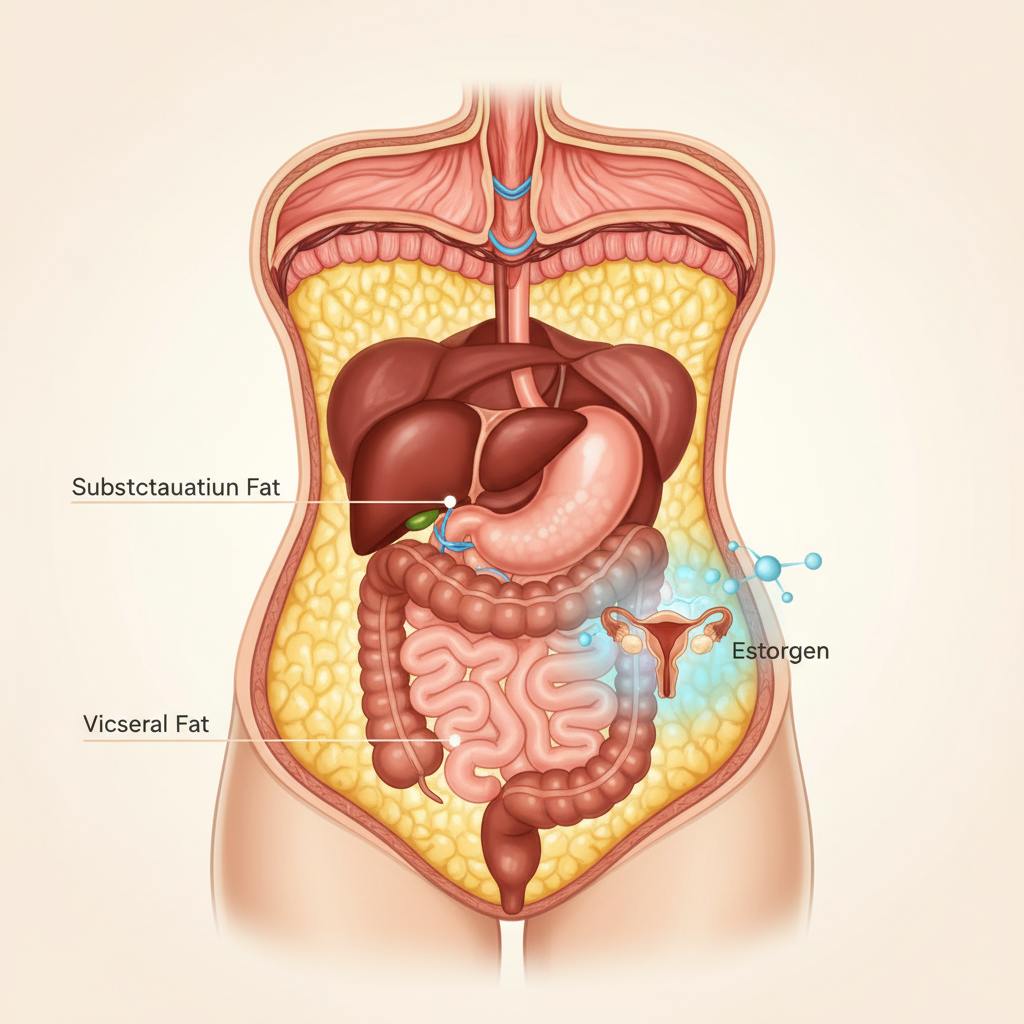
If you’ve noticed your favorite pair of jeans feeling a bit snugger around the waist lately, even if the scale hasn’t moved much, you aren't alone. This shift—often unceremoniously dubbed the "menopause middle"—is a physiological reality for many women entering their 40s and 50s. While it might feel like an aesthetic frustration, the change from subcutaneous fat to visceral fat is deeply rooted in your hormonal architecture.
Understanding the difference between visceral fat vs subcutaneous fat perimenopause change is the first step in reclaiming your metabolic health. This isn't just about "stubborn belly fat"; it’s about a fundamental shift in how your body processes energy and protects your organs.
Why is my fat suddenly concentrated around my organs?
For years, your body likely stored fat in a "pear-shaped" distribution—concentrated around the hips, thighs, and buttocks. This is largely driven by reproductive hormones that prioritize energy stores for potential pregnancy and breastfeeding. However, as you enter the perimenopausal transition, the "hourglass" often shifts toward an "apple" shape.
The fat you can pinch between your fingers is subcutaneous fat. It sits just under the skin and, while it can be frustrating, it is relatively metabolically inert. In contrast, visceral fat—the "hidden" fat—wraps itself around your internal organs like the liver, pancreas, and intestines. Even if you don't feel "overweight," an increase in waist circumference suggests an accumulation of this deeper adipose tissue.
This concentration happens because your metabolic "thermostat" is being recalibrated. As your ovaries slow down, your body looks for other ways to produce and manage energy. Unfortunately, the default storage site during this transition becomes the abdominal cavity. If you are also tracking other changes, such as those found in a perimenopause symptoms checklist, you’ll see that weight redistribution often travels alongside sleep disturbances and mood shifts.
What makes visceral fat more dangerous than other types of fat?
Visceral fat is not just a passive storage locker for calories; it is an active endocrine organ. It secretes inflammatory cytokines and hormones that can interfere with your body's normal functions. According to the Mayo Clinic, excess visceral fat is strongly linked to a higher risk of serious health issues, including type 2 diabetes, cardiovascular disease, and certain cancers.
The danger lies in its proximity to the portal vein, which carries blood from the intestinal area to the liver. Substances released by visceral fat (like free fatty acids) enter the portal vein and travel to the liver, where they can influence the production of blood lipids. This process is a major contributor to perimenopause insulin resistance signs, creating a cycle where high insulin levels encourage even more fat storage.
| Feature | Subcutaneous Fat | Visceral Fat |
|---|---|---|
| Location | Directly under the skin | Deep inside the abdominal cavity |
| Feel | Soft, can be "pinched" | Firm, pushes the abdomen out |
| Metabolic Impact | Lower; can even be protective | High; secretes inflammatory markers |
| Health Risks | Low to Moderate | High (Heart disease, Diabetes) |
| Hormonal Influence | Estrogen/Progesterone | Cortisol/Insulin |
How does the loss of estrogen change where we store fat?
The primary driver behind the visceral fat vs subcutaneous fat perimenopause change is the decline in estradiol (the most potent form of estrogen). Estrogen plays a critical role in lipid metabolism and fat distribution. When estrogen levels are high, it encourages fat to deposit in the gluteofemoral region (hips and thighs). As levels drop, the body’s lipoprotein lipase activity—an enzyme that helps store fat—shifts its focus to the abdominal region.
Research published via the National Institutes of Health (NIH) indicates that estrogen deficiency leads to a decrease in energy expenditure and an increase in systemic inflammation. This hormonal vacuum also makes us more sensitive to cortisol, the "stress hormone." Since abdominal fat cells have more receptors for cortisol than fat cells in other parts of the body, high stress during perimenopause acts like a magnet for visceral fat.
Furthermore, many women experience a concurrent decline in thyroid function or manage conditions like Hashimoto's perimenopause overlap, which further slows the basal metabolic rate. When your metabolism slows and your estrogen drops, your body becomes incredibly efficient at storing visceral fat as a survival mechanism.
Can you target visceral fat loss through specific exercises?
The short answer is no—you cannot "spot reduce" fat from your stomach by doing hundreds of crunches. However, you can prioritize types of movement that specifically trigger the mobilization of visceral fat.
To effectively combat the "middle shift," your movement strategy should follow this hierarchy:
- Resistance Training: Building lean muscle mass is the single most effective way to increase your resting metabolic rate. Muscle is metabolically expensive tissue; the more you have, the more energy your body burns even at rest.
- High-Intensity Interval Training (HIIT): Short bursts of intense activity followed by recovery periods have been shown to be more effective at reducing visceral fat than steady-state cardio (like long, slow jogs).
- NEAT (Non-Exercise Activity Thermogenesis): This includes all the movement you do outside of the gym—walking, gardening, cleaning. Increasing your daily step count helps keep insulin levels stable.
- Consistency over Intensity: Because perimenopause often brings about joint pain or fibromyalgia perimenopause symptoms, it is vital to find a sustainable rhythm that doesn't overtax your central nervous system.
According to the Endocrine Society, weight-bearing exercise is also crucial for maintaining bone density during this transition, providing a dual benefit for women facing the "middle" shift.
Is there a supplement that helps reduce abdominal fat storage?
While no "magic pill" exists to melt away visceral fat, certain supplements can support the metabolic pathways that are struggling during perimenopause.
- Magnesium: This mineral is essential for over 300 biochemical reactions, including insulin signaling. Improving insulin sensitivity can help prevent the "storage" signal that leads to visceral fat.
- Omega-3 Fatty Acids: Found in fish oil, these can help reduce the systemic inflammation associated with visceral adiposity.
- Berberine: Often referred to as "nature's metformin," some studies suggest it can help manage blood glucose levels, which is critical for those noticing perimenopause insulin resistance signs.
- Fiber (Glucomannan or Psyllium Husk): Increasing soluble fiber intake helps move hormones through the digestive tract and improves satiety.
It is also worth discussing HRT for perimenopause beginners guide with your healthcare provider. Stabilizing estrogen levels through Hormone Replacement Therapy has been shown in some studies to help mitigate the rapid accumulation of abdominal fat by mimicking the body's natural fat-distribution signals.
How do I measure my visceral fat levels at home?
You don't need a DEXA scan or an MRI to get a good idea of your visceral fat status. While BMI (Body Mass Index) is frequently used in doctors' offices, it is often a poor metric for perimenopausal women because it doesn't distinguish between muscle and fat.
Instead, use these three home-based methods:
- Waist Circumference: Use a soft measuring tape. Find the top of your hip bone and the bottom of your ribs. Measure midway between them (usually right across the belly button) at the end of a normal breath. For women, a measurement over 35 inches (88 cm) is often cited by the CDC as an indicator of increased health risk due to visceral fat.
- Waist-to-Hip Ratio (WHR): Measure your waist at its narrowest point and your hips at their widest point. Divide the waist measurement by the hip measurement. A ratio above 0.85 suggests a higher concentration of visceral fat.
- Waist-to-Height Ratio: This is increasingly considered the most accurate simple predictor. Your waist circumference should be less than half your height. For example, if you are 64 inches tall (5'4"), your waist should ideally be under 32 inches.
Monitoring these numbers can provide a clearer picture of your internal health than the scale alone. If you find your waist circumference is increasing while your weight stays the same, it is a sign that muscle is being replaced by visceral fat—a signal to adjust your protein intake and resistance training.
Balancing the Shift: Nutrition and Lifestyle
Addressing the visceral fat vs subcutaneous fat perimenopause change requires a holistic approach. Nutrition plays the biggest role. Reducing ultra-processed carbohydrates and added sugars is paramount because these foods trigger large insulin spikes. When insulin is high, your body is in "storage mode," and in the absence of estrogen, that storage is directed straight to the viscera.
Prioritize:
- Protein-First Eating: Aim for 25–30 grams of protein per meal to support muscle synthesis and satiety.
- Fiber-Rich Carbs: Focus on leafy greens, cruciferous vegetables, and berries which have a lower glycemic load.
- Stress Management: Since cortisol drives fat to the abdomen, practices like yoga, meditation, or even better sleep hygiene are not "luxuries"—they are metabolic necessities.
The transition of fat distribution is a natural biological process, but it doesn't have to be an inevitable decline into poor health. By understanding the hormonal "why" behind the "middle shift," you can implement targeted changes that protect your heart, your brain, and your confidence.
Remember, the goal isn't just a number on a scale or a specific waist measurement. The goal is metabolic flexibility—the ability of your body to burn fuel efficiently, maintain muscle, and keep inflammation at bay so you can radiate health through perimenopause and beyond. Health is a long game, and your "middle" is simply asking for a little more focused attention during this season of change. For more guidance on navigating these shifts, consult the North American Menopause Society (NAMS) for certified practitioners who specialize in midlife hormonal health.
FAQ
Common questions
What is the difference between visceral and subcutaneous fat?
Visceral fat surrounds internal organs and is metabolically active (and dangerous), while subcutaneous fat sits just under the skin and is generally less harmful to your health.
Does estrogen loss cause belly fat?
Falling estrogen levels shift fat storage from the hips and thighs (subcutaneous) to the abdomen (visceral) and can increase insulin resistance.
What waist measurement is considered high risk?
A waist measurement over 35 inches for women is typically a sign of excess visceral fat and increased health risks.
Can exercise reduce visceral fat?
Yes, HIIT and resistance training are specifically effective at burning visceral fat compared to steady-state cardio.
Is visceral fat dangerous?
Visceral fat produces inflammatory chemicals and is linked to heart disease, type 2 diabetes, and high blood pressure.
Is the perimenopause weight shift reversible?
Yes, by balancing hormones, improving insulin sensitivity through diet, and increasing muscle mass, you can reduce visceral fat levels.
Want this in your inbox each Sunday?
New articles, the science you can actually use, and the occasional rant.
Keep reading

Perimenopause Symptoms Checklist: 38 Signs You're Not Imagining
A comprehensive, doctor-reviewed checklist of perimenopause symptoms — from the obvious hot flashes to the weird ones nobody warned you about.
9 min read

Hashimoto's and Perimenopause: Why Symptoms Overlap (and How to Tell Them Apart)
Fatigue, brain fog, weight gain, hair loss — Hashimoto's and perimenopause share most symptoms. Here's how to tell what's flaring, what's hormonal, and what to ask your doctor.
11 min read

Fibromyalgia and Perimenopause: When Two Storms Collide
Why fibromyalgia almost always flares during perimenopause, what changes in your nervous system, and the small daily shifts that actually help.
10 min read