
Vitamin E for Perimenopause: Help for Hot Flashes & Dryness
Explore how vitamin E helps perimenopause hot flashes and vaginal dryness. Learn about dosages, types (tocopherols vs tocotrienols), and safety for women over 40.
Published:
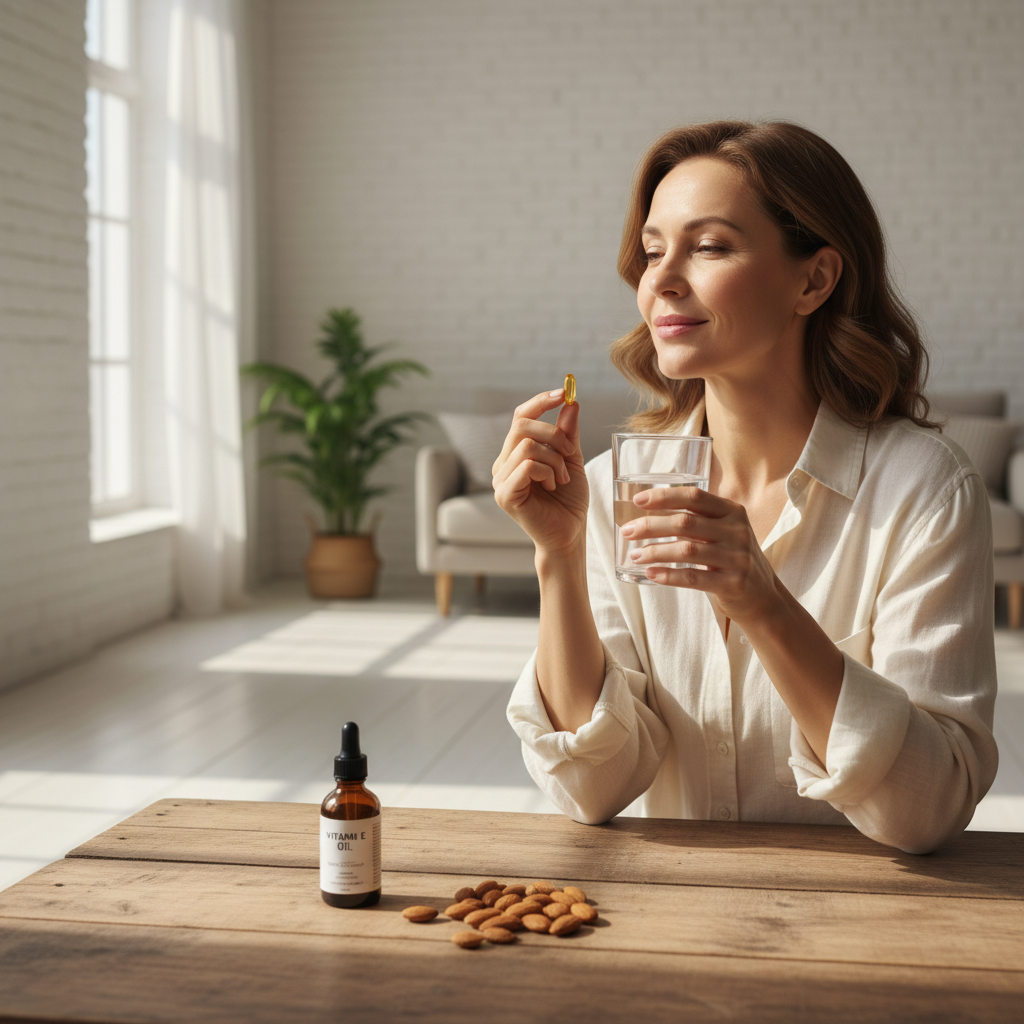
As you navigate the transition into perimenopause, you may feel like your body has developed a mind of its own. From sudden surges of heat to changes in your most intimate health, the search for relief often leads to the vitamin aisle. One supplement that consistently surfaces in conversations about hormonal health is Vitamin E. But can a simple antioxidant really stand up to the complex physiological shifts of declining estrogen?
Vitamin E has been studied for decades as a potential alternative for those who cannot or choose not to use Hormone Replacement Therapy (HRT). Whether you are managing the perimenopause symptoms checklist or specifically looking for "vitamin e for perimenopause hot flashes and vaginal dryness," understanding the science behind this nutrient is essential for your safety and success.
Does vitamin E actually work for perimenopause symptoms?
Vitamin E is not a hormone, but it acts as a powerful fat-soluble antioxidant that protects cell membranes from oxidative stress. During perimenopause, the fluctuation and eventual decline of estrogen can increase systemic inflammation and oxidative damage. Research suggests that Vitamin E may help stabilize these processes.
Studies have shown that Vitamin E can provide modest relief for vasomotor symptoms (hot flashes and night sweats). According to a study published by the National Institutes of Health (NIH), Vitamin E was found to be more effective than a placebo in reducing the frequency and severity of hot flashes, although the effect was generally considered "mild" compared to pharmaceutical interventions.
Beyond hot flashes, Vitamin E plays a role in supporting the health of mucosal membranes. This is particularly relevant for women experiencing vaginal atrophy or dryness. Because Vitamin E helps maintain the structural integrity of cells, it can improve the moisture levels and elasticity of the vaginal wall. For women also dealing with perimenopause insulin resistance signs, managing oxidative stress through antioxidants like Vitamin E may offer secondary metabolic benefits, though it is not a primary treatment for blood sugar issues.
How does vitamin E compare to HRT for hot flash relief?
When comparing Vitamin E to Hormone Replacement Therapy (HRT), it is important to manage expectations. HRT is the "gold standard" for treating menopausal symptoms because it directly replaces the hormones your body is no longer producing at optimal levels.
| Feature | Vitamin E Supplementation | Hormone Replacement Therapy (HRT) |
|---|---|---|
| Mechanism | Antioxidant / Cell protection | Direct Hormone Replacement |
| Hot Flash Reduction | Mild (approx. 1-2 fewer per day) | Significant (up to 80-90% reduction) |
| Vaginal Health | Local/Systemic hydration | Restores tissue thickness & pH |
| Onset of Action | 4 to 6 weeks | 1 to 2 weeks |
| Side Effects | Low (at RDA levels) | Varies (requires medical supervision) |
If you are just beginning your journey, you might find our HRT for perimenopause beginners guide helpful for comparing these paths. While Vitamin E is an excellent supportive nutrient, it rarely achieves the total symptom suppression that HRT offers. However, for women with contraindications to estrogen—such as a history of certain cancers or blood clots—Vitamin E serves as a valuable, low-risk alternative.
The Mayo Clinic notes that while botanical and vitamin supplements are popular, their efficacy is often lower than prescription options. However, for "low-frequency" hot flashes, Vitamin E remains a recommended first-line natural intervention.
Can you use vitamin E oil topically for vaginal dryness?
Yes, and this is perhaps where Vitamin E shines brightest in the realm of perimenopause. Vaginal atrophy (thinning and drying of the vaginal walls) affects a significant percentage of women as they approach menopause.
Topical Vitamin E can be applied in two ways:
- Vitamin E Suppositories: These are formulated specifically for internal use and melt at body temperature to coat the vaginal canal.
- Pure Vitamin E Oil: Many women use a high-quality, tocopherol-based oil applied externally to the vulva or internally using a clean applicator.
A study cited by NCBI compared Vitamin E vaginal suppositories to conjugated estrogen cream. The results indicated that Vitamin E significantly improved symptoms of vaginal dryness and reached a high level of patient satisfaction, making it a viable alternative for those avoiding hormonal creams.
If you are also experiencing systemic pain, such as the symptoms discussed in our guide on fibromyalgia-perimenopause symptoms, topical treatments like Vitamin E can at least remove the "friction" of vaginal discomfort from your total pain load, improving quality of life and sexual health.
What is the safest dosage of vitamin E for women over 40?
When it comes to Vitamin E, more is not necessarily better. Because it is fat-soluble, your body stores it in fatty tissue and the liver, rather than excreting excess through urine. This means it can build up to toxic levels if over-supplemented.
The Recommended Dietary Allowance (RDA) for adult women is 15 mg (22.4 IU) per day. However, clinical trials for hot flashes often use higher doses, typically ranging from 400 IU to 800 IU.
Safety Guidelines for Women Over 40:
- Upper Limit: The tolerable upper intake level (UL) for adults is 1,000 mg (1,500 IU) per day of natural Vitamin E.
- Medical Supervision: If you are taking blood thinners (like Warfarin or aspirin), you must consult a doctor, as Vitamin E has mild anticoagulant properties.
- Source Matters: Always look for "d-alpha-tocopherol" (natural) rather than "dl-alpha-tocopherol" (synthetic), as the natural form is more bioavailable.
For those managing complex autoimmune overlaps, such as those detailed in our Hashimotos perimenopause overlap article, it is vital to ensure Vitamin E doesn't interfere with your thyroid medication absorption.
Are there specific types of vitamin E (tocopherols vs tocotrienols) I need?
Most people think "Vitamin E" is a single molecule, but it is actually a family of eight different compounds: four tocopherols (alpha, beta, gamma, delta) and four tocotrienols.
- Alpha-tocopherol: This is the form most recognized by the human body and the one found in most supplements. It is the primary form used in research for hot flashes.
- Gamma-tocopherol: Recent research suggests gamma-tocopherol is essential for neutralizing certain free radicals that alpha-tocopherol cannot.
- Tocotrienols: These are often called "The 21st Century Vitamin E." Emerging research from the American Heart Association and other institutions suggests tocotrienols may have more potent neuroprotective and cholesterol-lowering properties than tocopherols.
For perimenopause, a "mixed tocopherol" complex is usually recommended. This ensures you aren't flooding your system with just one form, which can sometimes displace the others.
What are the risks of taking vitamin E with other supplements?
While Vitamin E is generally safe, it can interact with other nutrients and medications.
- Vitamin K Interaction: High doses of Vitamin E can antagonize Vitamin K, which is essential for blood clotting and bone health. If you are taking a Vitamin K2 supplement for bone density in perimenopause, keep your Vitamin E intake at a moderate level.
- Iron Supplements: Vitamin E and Iron can interfere with each other's absorption. It is best to take them at different times of the day.
- Chemotherapy and Radiation: Because Vitamin E is an antioxidant, there is some concern it may protect cancer cells during treatment. Always consult an oncologist if this applies to you.
The Office of Dietary Supplements (ODS) warns that high-dose Vitamin E supplementation may increase the risk of hemorrhagic stroke, particularly in individuals already predisposed to bleeding issues.
How long does it take to see results from vitamin E for hormones?
Patience is key when using nutritional interventions for hormonal shifts. Unlike a fast-acting sedative or a targeted hormone dose, Vitamin E works by slowly changing the oxidative state of your cells.
- Weeks 1-2: You may not notice any change. Your body is building up its tissue stores.
- Weeks 4-6: This is the typical window where women report a decrease in the "intensity" of hot flashes. They may not disappear, but they may feel less "electrifying" or overwhelming.
- Months 2-3: Improvements in vaginal lubrication and skin elasticity usually become more apparent by the second or third month of consistent use.
If you have reached the 12-week mark and see no improvement, Vitamin E may not be the right solution for your specific biochemistry. At that point, investigating other entries on the perimenopause symptoms checklist with your provider is a wise next step.
Integrating Vitamin E into Your Routine
To get the most out of Vitamin E for perimenopause hot flashes and vaginal dryness, consider a holistic approach.
- Dietary Sources: Incorporate sunflower seeds, almonds, spinach, and avocado into your meals. Food-based Vitamin E comes with co-factors that improve absorption.
- Pairing with Vitamin C: Vitamin C helps "regenerate" Vitamin E after it has neutralized a free radical, making your supplement more effective.
- Hydration: Vitamin E helps retain moisture, but you must provide the hydration first. Ensure you are drinking adequate water, especially if you struggle with perimenopause insulin resistance signs, which can lead to dehydration.
Final Thoughts for Your Radiance
Your journey through perimenopause is unique. While Vitamin E is not a "magic pill," its role as a cellular protector makes it a worthy ally. Whether you use it as a topical oil for comfort or a daily supplement to take the edge off hot flashes, it offers a gentle, evidence-based way to support your body's transition.
Always remember that supplements work best when the foundation—sleep, stress management, and nutrition—is solid. If you find your symptoms are interfering with your ability to function, don't hesitate to explore the HRT for perimenopause beginners guide or speak with a menopause specialist. You deserve to feel vibrant and comfortable in your skin through every stage of this transition.
By understanding the "how" and "when" of Vitamin E, you take another step toward reclaiming your radiance and navigating perimenopause with confidence.
Check back often as we continue to explore the intersection of nutrition and hormonal health, including deep dives into the Hashimotos perimenopause overlap and managing the complexities of fibromyalgia-perimenopause symptoms. Your health is a journey, and you don't have to walk it alone.
FAQ
Common questions
Can Vitamin E really stop hot flashes?
Current research suggests that Vitamin E can provide mild to moderate relief for hot flashes, reducing both frequency and intensity, though it is typically less potent than HRT.
Is Vitamin E oil safe for vaginal dryness?
Yes, Vitamin E oil or suppositories are evidence-based natural alternatives to hormonal creams for improving vaginal moisture and tissue elasticity.
What is the recommended dosage of Vitamin E for perimenopause?
The RDA is 15 mg, but for perimenopause symptoms, clinical studies often use 400 IU to 800 IU daily. Consult your doctor before exceeding the RDA.
Should I take natural or synthetic Vitamin E?
Natural Vitamin E (d-alpha-tocopherol) is generally preferred over synthetic (dl-alpha-tocopherol) due to its superior bioavailability and absorption.
How long does it take for Vitamin E to work?
It typically takes 4 to 8 weeks of consistent supplementation to notice a significant reduction in hot flashes or improvement in skin and mucosal dryness.
Are there side effects to taking Vitamin E?
Vitamin E can thin the blood. If you are taking anticoagulants like Warfarin or aspirin, or if you have a scheduled surgery, consult your doctor first.
Want this in your inbox each Sunday?
New articles, the science you can actually use, and the occasional rant.
Keep reading

Perimenopause Symptoms Checklist: 38 Signs You're Not Imagining
A comprehensive, doctor-reviewed checklist of perimenopause symptoms — from the obvious hot flashes to the weird ones nobody warned you about.
9 min read

Hashimoto's and Perimenopause: Why Symptoms Overlap (and How to Tell Them Apart)
Fatigue, brain fog, weight gain, hair loss — Hashimoto's and perimenopause share most symptoms. Here's how to tell what's flaring, what's hormonal, and what to ask your doctor.
11 min read

Fibromyalgia and Perimenopause: When Two Storms Collide
Why fibromyalgia almost always flares during perimenopause, what changes in your nervous system, and the small daily shifts that actually help.
10 min read