
Neck and Shoulder Weight Gain: Perimenopause or Cortisol?
Discover why perimenopause causes weight gain on the neck and shoulders. Learn about the roles of cortisol, insulin resistance, and estrogen in fat redistribution.
Published:
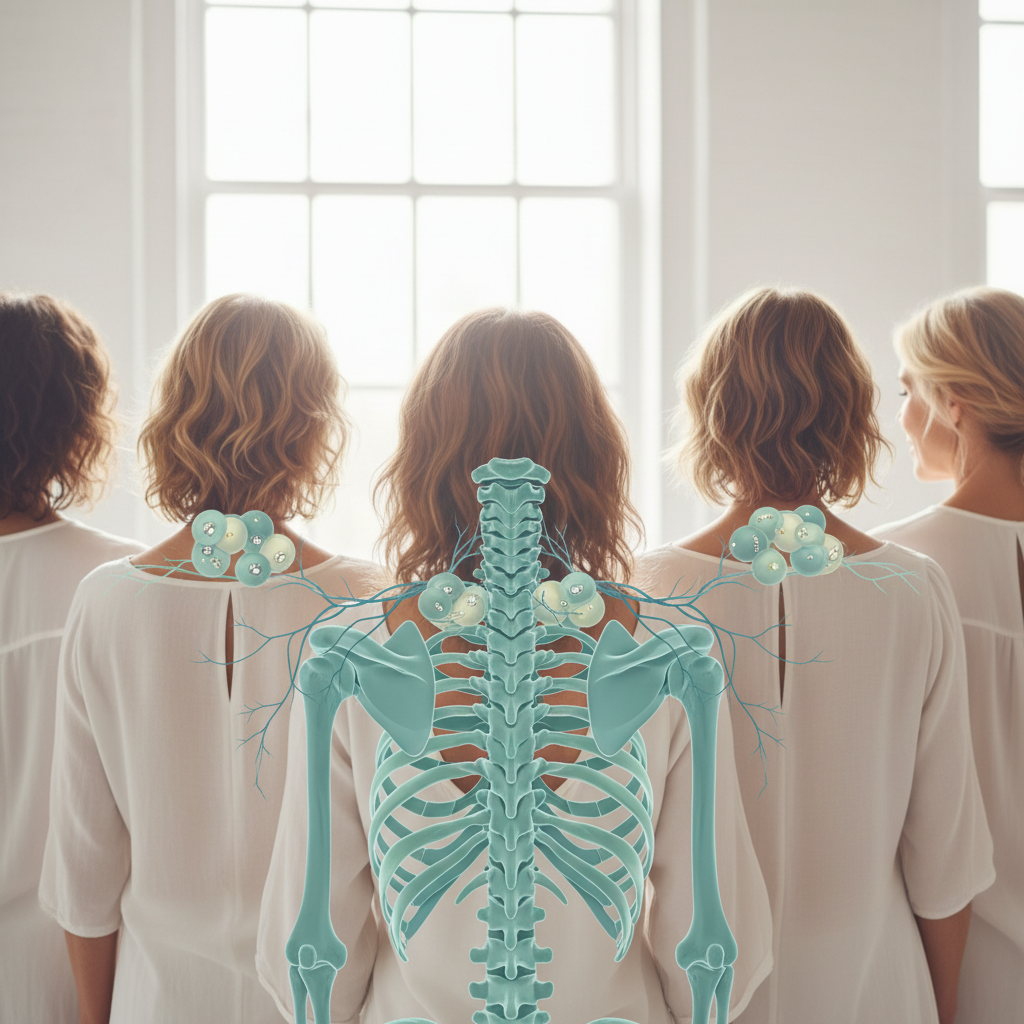
You stand in front of the mirror, adjusting your blouse, and you notice it: a fullness at the base of your neck that wasn't there a few years ago. Maybe your bras feel tighter across the shoulders, or you feel like your upper back has taken on a "padded" appearance. If you are in your 40s or early 50s, your first instinct might be to blame your gym routine—or lack thereof. But the reality of weight gain on back of neck and shoulders in perimenopause is often deeply rooted in a complex dance of hormones, not just calories.
This specific fat distribution—sometimes colloquially called a "buffalo hump" or "dowager’s hump"—can be distressing. It changes how your clothes fit and how you carry yourself. But understanding whether this is a natural shift of perimenopause, a symptom of high cortisol, or a sign of insulin resistance is the first step toward reclaiming your metabolic health.
Why is fat accumulating on the back of my neck and shoulders?
In your 20s and 30s, estrogen typically directs fat storage to your hips, thighs, and buttocks (the "pear" shape). This is biologically designed to support the energy needs of pregnancy and lactation. However, as you enter perimenopause, estrogen levels begin to fluctuate wildly and eventually decline.
According to the Mayo Clinic, this hormonal shift causes a significant redistribution of body fat. Instead of the lower body, fat begins to settle in the abdominal cavity and the upper torso. But why the neck and shoulders?
This area is particularly sensitive to glucocorticoids (stress hormones) and insulin. When your hormones are in flux, your body becomes more reactive to stress. The tissue at the cervicothoracic junction (where your neck meets your back) contains a high density of receptors that respond to these metabolic signals. If your body is in a state of "storage mode" due to hormonal instability, this area becomes a prime target for adipose tissue accumulation.
Is the 'buffalo hump' a sign of perimenopause cortisol issues?
The term "buffalo hump" (dorsocervical fat pad) is often associated with high levels of cortisol. Cortisol is your body's primary stress hormone, produced by the adrenal glands. During the transition to menopause, your adrenals often have to work overtime. As the ovaries wind down their production of estrogen and progesterone, the adrenals step in to produce precursors to these hormones.
If you are simultaneously dealing with high life stress, poor sleep (a hallmark of the perimenopause symptoms checklist), and the physiological stress of hormonal fluctuations, your cortisol levels may stay chronically elevated.
Research indicates that chronic hypercortisolism leads to "central obesity," which includes the face (moon face), the abdomen, and the supraclavicular and dorsocervical areas (shoulders and neck). While a true medical "buffalo hump" is usually a sign of a more severe condition like Cushing’s Syndrome, many women in perimenopause experience a milder version of this fat pad due to "subclinical" high cortisol and the loss of the protective effects of progesterone.
How does insulin resistance change your fat distribution after 40?
Perimenopause and insulin resistance are unfortunately close companions. Estrogen plays a vital role in maintaining insulin sensitivity. As estrogen wanes, your cells become less efficient at taking up glucose from your blood. In response, your pancreas pumps out more insulin to compensate.
Insulin is a "pro-storage" hormone. When insulin levels are chronically high, your body struggles to access stored fat for fuel and instead looks for new places to pack it away. This metabolic shift is one of the primary perimenopause insulin resistance signs.
| Feature | Cortisol-Driven Fat | Insulin-Driven Fat |
|---|---|---|
| Primary Location | Back of neck, face, upper back | Midsection, "love handles," upper back |
| Associated Symptom | Thin skin, easy bruising | Skin tags, darkened skin folds |
| Trigger | Chronic stress, lack of sleep | High sugar/carb intake, sedentary lifestyle |
| Muscle Impact | Muscle wasting in legs/arms | General loss of muscle tone |
Excess insulin promotes the growth of fat cells in the upper body and neck. Furthermore, insulin resistance often triggers systemic inflammation, which can make the fat in these areas feel "puffy" or tender to the touch, similar to the sensations reported by those navigating fibromyalgia-perimenopause symptoms.
Could it be Cushing’s syndrome or just perimenopause metabolic shifts?
It is important to distinguish between the common metabolic shifts of midlife and a rare but serious endocrine disorder called Cushing’s syndrome.
Cushing’s occurs when your body produces far too much cortisol over a long period, or when you take high doses of corticosteroid medications (like prednisone) for conditions such as asthma or rheumatoid arthritis.
The National Institutes of Health (NIH) notes that the symptoms of Cushing’s can mimic perimenopause, but they are usually more extreme:
- A very pronounced, large fat pad on the back of the neck.
- Purple stretch marks (striae) on the abdomen or breasts.
- Significant muscle weakness in the hips and shoulders.
- Fragile skin that bruises easily.
If your neck fat gain is rapid and accompanied by these specific signs, you should consult an endocrinologist. However, for the majority of women, weight gain on the back of the neck and shoulders in perimenopause is a result of the "perfect storm" of declining estrogen, rising insulin, and fluctuating cortisol—not a rare disease.
Does estrogen dominance contribute to upper back and shoulder weight?
In early perimenopause, you may actually experience periods of "estrogen dominance." This doesn't necessarily mean you have too much estrogen in absolute terms, but rather that your estrogen is high relative to your dropping progesterone levels.
Progesterone acts as a natural diuretic and has a calming effect on the nervous system. When progesterone drops, you may experience significant water retention and an increased sensitivity to stress (cortisol). This can lead to a "puffy" appearance in the upper back and shoulders. Furthermore, the Endocrine Society highlights that the ratio of testosterone to estrogen increases during this time. This "androgenic" shift further encourages fat to deposit in the upper body, mirroring a more male-pattern fat distribution.
For many women, starting a targeted hormone therapy plan can help balance these ratios. If you are considering this route, reviewing an HRT for perimenopause beginners guide can help you understand how bioidentical hormones might stabilize your metabolic profile.
Can postural changes in perimenopause make a neck hump look worse?
Sometimes, what we perceive as "weight gain" is actually a change in our skeletal alignment. In perimenopause, the risk of bone density loss increases. Small changes in the vertebrae of the upper spine (the thoracic spine) can lead to a forward-leaning posture known as kyphosis.
When your head leans forward—a position exacerbated by hours spent on smartphones or computers ("tech neck")—the fatty tissue at the base of the neck bunches up. This makes a small amount of fat look like a significant hump.
Furthermore, perimenopausal women often experience a loss of muscle mass (sarcopenia). As the muscles of the upper back and neck weaken, they can no longer hold the spine in a neutral position. This structural change, combined with the metabolic fat storage discussed earlier, creates the characteristic "upper back pad." Ensuring your thyroid health is optimal is also key here, as thyroid issues can exacerbate muscle weakness and weight gain; you can learn more about this in our article on the Hashimotos-perimenopause overlap.
What lifestyle changes target metabolic neck and shoulder fat?
You cannot "spot reduce" fat in one specific area through exercise alone, but you can change the hormonal environment that tells your body to store fat there.
- Prioritize Strength Training: To combat insulin resistance and sarcopenia, lift weights. Building muscle in the legs and glutes improves your overall metabolic rate and insulin sensitivity, which reduces the "storage signal" to your upper back.
- Manage Cortisol with "Slow" Movement: High-intensity interval training (HIIT) can sometimes spike cortisol too high in perimenopausal women. Balance your routine with yoga, walking, or Pilates to keep stress hormones in check.
- Anti-Inflammatory Nutrition: Focus on a diet rich in fiber and protein to stabilize blood sugar. Reducing ultra-processed carbohydrates lowers the insulin spikes that drive upper-body fat storage.
- Support Your Posture: Incorporate "thoracic mobility" exercises. Simple movements like chest stretches and chin tucks can help realign your spine and reduce the appearance of a neck hump.
- Prioritize Sleep Hygiene: Sleep deprivation is a direct trigger for cortisol spikes and insulin resistance. Aim for 7–9 hours of cool, dark sleep to allow your hormones to reset.
When should you test your glucose and cortisol for upper body weight gain?
If you have been making lifestyle adjustments for 3–6 months and the fat accumulation on your neck and shoulders continues to increase, or if it is accompanied by extreme fatigue, it is time for blood work.
You should request the following tests from your healthcare provider:
- Hemoglobin A1c (HbA1c): A 3-month average of your blood sugar levels to check for pre-diabetes.
- Fasting Insulin: Often more revealing than glucose alone for early signs of insulin resistance.
- Morning Cortisol: A baseline check of your adrenal function (usually drawn before 9:00 AM).
- Full Thyroid Panel: Including TSH, Free T3, Free T4, and TPO antibodies to rule out metabolic slowing from thyroid dysfunction.
Understanding the "why" behind your body's changes is the most powerful tool you have. The weight gain on your neck and shoulders isn't just a sign of "getting older"—it's a signal from your endocrine system that it needs a little extra support during this transition. By addressing the trio of estrogen, insulin, and cortisol, you can shift your body back into balance and feel more like yourself again.
Frequently Asked Questions
Can perimenopause cause a hump on the back of the neck?
Yes. The hormonal shift in perimenopause leads to a redistribution of fat from the hips to the upper body and abdomen. Declining estrogen levels, combined with increased insulin resistance and cortisol sensitivity, can cause fatty tissue to accumulate at the base of the neck.
Is weight gain on the shoulders a sign of high cortisol?
It can be. High cortisol levels, often triggered by chronic stress or sleep deprivation during perimenopause, promote fat storage in the "central" areas of the body, including the upper back, shoulders, and face. This is often referred to as a "stress-induced" fat pattern.
How do I get rid of the fat on the back of my neck during menopause?
Managing this requires a three-pronged approach: stabilizing blood sugar to lower insulin, managing stress to lower cortisol, and performing strength training to improve posture and metabolism. HRT may also help by balancing the estrogen-to-androgen ratio.
Can insulin resistance cause a buffalo hump?
While a true buffalo hump is often cortisol-related, insulin resistance is a major contributor to upper body fat. High insulin levels signal the body to store fat in the upper torso and back, and can also lead to inflammation in those fat pads.
Does estrogen help with fat redistribution?
Estrogen helps maintain a "gynoid" fat pattern (hips and thighs) and improves insulin sensitivity. When estrogen drops in perimenopause, the body naturally shifts toward an "android" pattern, depositing more fat in the upper back, shoulders, and midsection.
Is a neck hump always fat, or could it be bone?
It can be both. While hormonal shifts cause fat accumulation, perimenopause also affects bone density. Curvature of the upper spine (kyphosis) can make a small amount of fat appear much more prominent, creating a structural "hump."
FAQ
Common questions
Can perimenopause cause a hump on the back of the neck?
Yes. The hormonal shift in perimenopause leads to a redistribution of fat from the hips to the upper body and abdomen. Declining estrogen levels, combined with increased insulin resistance and cortisol sensitivity, can cause fatty tissue to accumulate at the base of the neck.
Is weight gain on the shoulders a sign of high cortisol?
It can be. High cortisol levels, often triggered by chronic stress or sleep deprivation during perimenopause, promote fat storage in the "central" areas of the body, including the upper back, shoulders, and face. This is often referred to as a "stress-induced" fat pattern.
How do I get rid of the fat on the back of my neck during menopause?
Managing this requires a three-pronged approach: stabilizing blood sugar to lower insulin, managing stress to lower cortisol, and performing strength training to improve posture and metabolism. HRT may also help by balancing the estrogen-to-androgen ratio.
Can insulin resistance cause a buffalo hump?
While a true buffalo hump is often cortisol-related, insulin resistance is a major contributor to upper body fat. High insulin levels signal the body to store fat in the upper torso and back, and can also lead to inflammation in those fat pads.
Does estrogen help with fat redistribution?
Estrogen helps maintain a "gynoid" fat pattern (hips and thighs) and improves insulin sensitivity. When estrogen drops in perimenopause, the body naturally shifts toward an "android" pattern, depositing more fat in the upper back, shoulders, and midsection.
Is a neck hump always fat, or could it be bone?
It can be both. While hormonal shifts cause fat accumulation, perimenopause also affects bone density. Curvature of the upper spine (kyphosis) can make a small amount of fat appear much more prominent, creating a structural "hump."
Want this in your inbox each Sunday?
New articles, the science you can actually use, and the occasional rant.
Keep reading

Perimenopause Symptoms Checklist: 38 Signs You're Not Imagining
A comprehensive, doctor-reviewed checklist of perimenopause symptoms — from the obvious hot flashes to the weird ones nobody warned you about.
9 min read

Hashimoto's and Perimenopause: Why Symptoms Overlap (and How to Tell Them Apart)
Fatigue, brain fog, weight gain, hair loss — Hashimoto's and perimenopause share most symptoms. Here's how to tell what's flaring, what's hormonal, and what to ask your doctor.
11 min read

Fibromyalgia and Perimenopause: When Two Storms Collide
Why fibromyalgia almost always flares during perimenopause, what changes in your nervous system, and the small daily shifts that actually help.
10 min read